

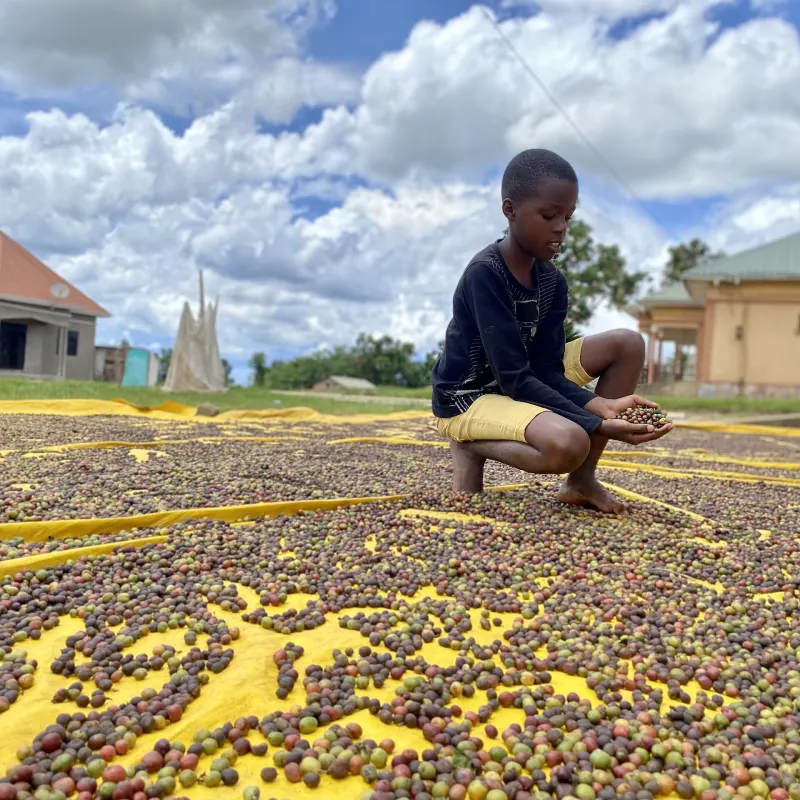
Coffee and cocoa provide a living for much of Forest Guinea. But behind the harvests, the sector faces mounting difficulties, from Macenta to N'Zérékoré.
In Macenta, a shortage of hands
According to several sources cited by the Le360 Afrique website, Guinea produces around 18,000 tonnes of coffee a year, placing it among the world's top twenty producers. In Macenta, output improved this year but prices fell: coffee trades at between 15,000 and 20,000 Guinean francs on the market, after reaching 50,000 francs for the first time between 2024 and 2025.
Growers first point to the lack of labour: clearing land before planting, which usually starts in June or July, is becoming difficult for want of workers. Agricultural advisers also highlight the lack of support from production to sale, and the advances taken from traders before the harvest, which then force producers to accept whatever price they are offered.
In N'Zérékoré, the ONCQ wants an end to “mixing”
In N'Zérékoré, the National Quality Control Office (ONCQ) warned operators as the season approached. At the end of September, the head of its quality control service, Moussa Sacko, denounced the mixing of good- and poor-quality produce to hide defects, loads shipped without inspectors and non-compliant lots sent to Conakry. He warned that he would no longer validate documents for substandard produce.
A hub for Ivorian cocoa
The region also attracts cocoa from Côte d'Ivoire. According to the Ivorian daily Fraternité Matin, N'Zérékoré, about 80 kilometres from Danané, is seen by people in the sector as the main collection centre for smuggled cocoa. The paper notes that the International Cocoa Organization estimates Guinea's output at 20,000 to 25,000 tonnes a year, while Guinea's declared exports exceeded 120,000 tonnes in each of the last two seasons.
Comments
Loading comments…