

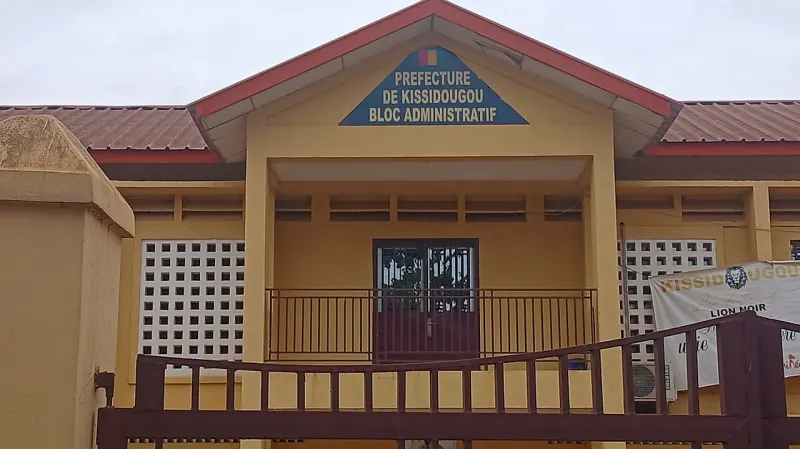
Should sub-prefectures, the lowest tier of state administration in Guinea, be abolished? The question has now been formally raised, but an answer is some way off. The Minister of Territorial Administration and Decentralisation (MATD), Djenabou Touré, presented the record of her first hundred days and the timetable for upcoming reforms at a press lunch in Conakry on Thursday 12 November 2026.
The country has 378 sub-prefectures. Their proposed abolition is, in the minister's words, “the major difficulty” of the undertaking. She pointed out that such a measure would have significant constitutional, legal, property and social consequences. In many rural areas, the sub-prefecture remains the only point of contact between residents and the administration, for civil registration, land disputes and everyday formalities. Without accompanying measures, its disappearance would distance the state from these communities.
Twelve months for a diagnosis
To settle the matter, the ministry is setting up a National Commission for Territorial Reform, which is currently being installed. It will have twelve months to carry out a review of the legislation and administrative practices applied since independence in 1958 and to make recommendations on the country's territorial organisation. Assessing the effects of a possible abolition of sub-prefectures will be the subject of a separate study. The diagnosis is therefore not expected to be completed before the end of 2027.
The ministry is also drafting a National Charter for Deconcentration. The text is intended to clarify how law L/2018/025 is applied and to set the thresholds and procedures for creating basic territorial units, such as neighbourhoods, districts and sectors. Governors and prefects will also receive annual mission letters with measurable objectives.
An administrative map already redrawn

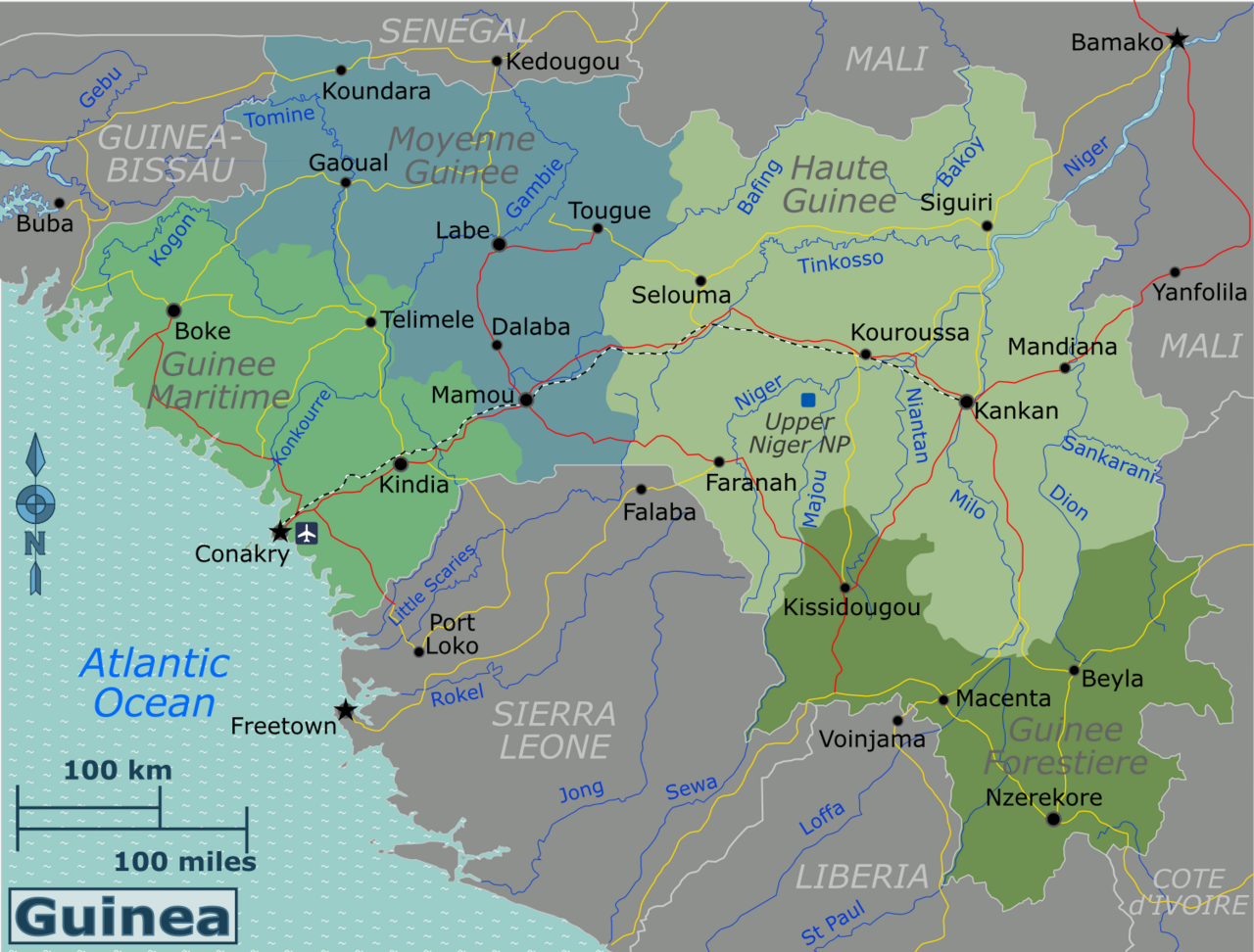
The review comes as the country's map has just been extensively redrawn. A presidential decree of 20 August 2026 created two new administrative regions, Siguiri and Beyla, and eleven new prefectures: Kamsar in the Boké region; Timbo in the Mamou region; Tokounou, Dialakoro and Sabadou-Baranama in the Kankan region; Doko, Siguirini and Kintinian in the Siguiri region; and Sinko, Kouankan and Karala in the Beyla region. Guinea now has nine administrative regions and 44 prefectures, in addition to the special zone of Conakry, compared with seven regions and 33 prefectures previously.
Interim prefects have been appointed in the eleven new prefectures and criteria for appointing prefects and governors have been defined, the ministry said. The redrawing also has electoral consequences: not all the new entities can be represented in the regional elections on 29 November and the senatorial elections on 20 December 2026, hence the supplementary polls announced for 2027.
87.5% of actions completed, the ministry says
Appointed on 31 July 2026, Djenabou Touré had set a roadmap of 72 actions for her first hundred days. The ministry says 63 have been completed, 6 are under way and 3 are scheduled, a completion rate of 87.5%. These figures are those presented by the minister herself.
Measures cited include the classification of municipalities, updating the rules governing municipal revenue officers, 163 of whom are in post, and the ongoing transfer of powers from the Conakry city council to the capital's 13 municipalities. The ministry also held workshops on modernising civil registration in Conakry, Boké and Mamou, and paid a second instalment of aid to 800 disaster-hit families in Dar Es Salam.
Digitising civil registration and identification, speeding up the processing of pension files and improving working conditions for staff are among the priorities announced for the coming months. The fate of the sub-prefectures, meanwhile, will depend on the conclusions of the future commission.



Comments
Loading comments…