

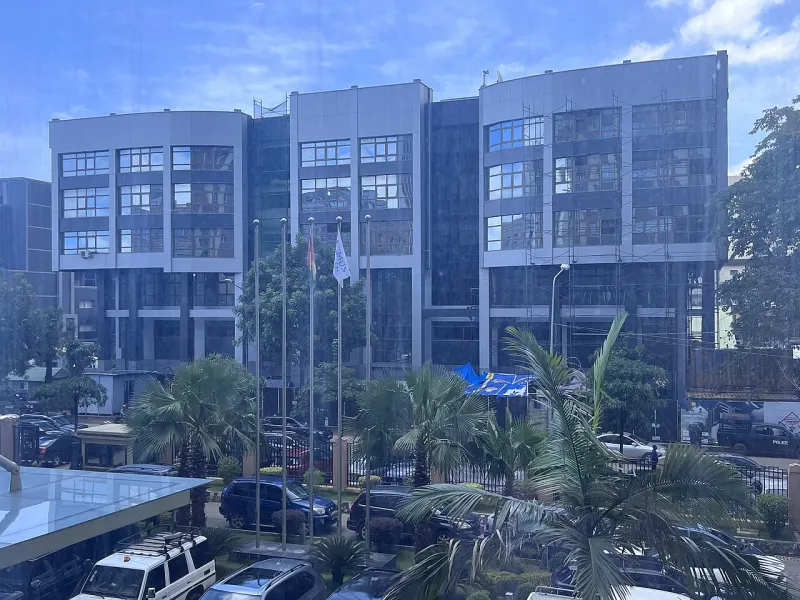
West Africa is reviving its long-running monetary project. Abidjan hosted, on 20 and 21 November 2026, the sixth meeting of the Ministerial Committee of the Presidential Task Force on the ECOWAS single currency programme. Finance ministers, central bank governors and heads of regional institutions worked towards a specific goal: making a phased introduction of the ECO possible in 2027.
The ministerial meeting had been prepared by the Task Force's technical committee, which met in the Ivorian economic capital from 17 to 19 November. Its report served as the basis for the ministers' discussions, held under the theme "Accelerating priority reforms and consolidating political consensus".
Headquarters of the future institutions under discussion
At the heart of the debate are sensitive questions that have long been put off: the choice of countries that will host the main institutions of the future monetary union. These are the future Central Bank of West Africa, the components of the community payment and settlement system, and the Solidarity and Stabilisation Fund. The governance arrangements for these bodies, namely the representation of member states, decision-making rules and the allocation of responsibilities, were also on the table.
The ministers were also due to approve the strategic and operational framework for the transition to the ECO, set the policy guidelines for the phased launch and adopt a logical framework covering the priority workstreams agreed at the 13th session of the Convergence Council. Their recommendations are to be forwarded to the heads of state, who have the final say.
Convergence criteria, a condition for credibility
Ivorian Minister of Economy, Finance and Budget Adama Coulibaly, who chaired the proceedings on behalf of President Alassane Ouattara, described the creation of the ECO as "a strategic issue for the economic and monetary integration of West Africa". He stressed compliance with the macroeconomic convergence criteria, presented as an essential condition for the stability of the future currency, against a backdrop of geopolitical tensions, insecurity, inflationary pressures and rising interest rates. He urged member states to speed up their reforms.
Attending the meeting for the first time as President of the ECOWAS Commission, General Birame Diop recalled that the project dates back more than four decades and concerns a region of more than 400 million people. He warned, however, that the benefits of a common currency would not be automatic: they will also depend on free movement, trade liberalisation and infrastructure, and above all on strong political will.
A project postponed several times
The ECO has already been postponed many times since it was launched. A new macroeconomic convergence and stability pact was adopted in June 2021, setting 2027 as the new target. The chosen approach provides for a start with the countries that meet the criteria, with the others joining the union as they make progress. Ghana recently said it was ready for the deadline.
For Guinea, which has its own currency, the Guinean franc, and belongs to the West African Monetary Zone alongside several English-speaking countries and the Gambia, the stakes are real: the ECO is ultimately meant to bring together both the eight WAEMU countries, which use the CFA franc, and the states with a national currency. The precise timetable and the list of the first countries involved have yet to be decided by the heads of state.

Comments
Loading comments…