

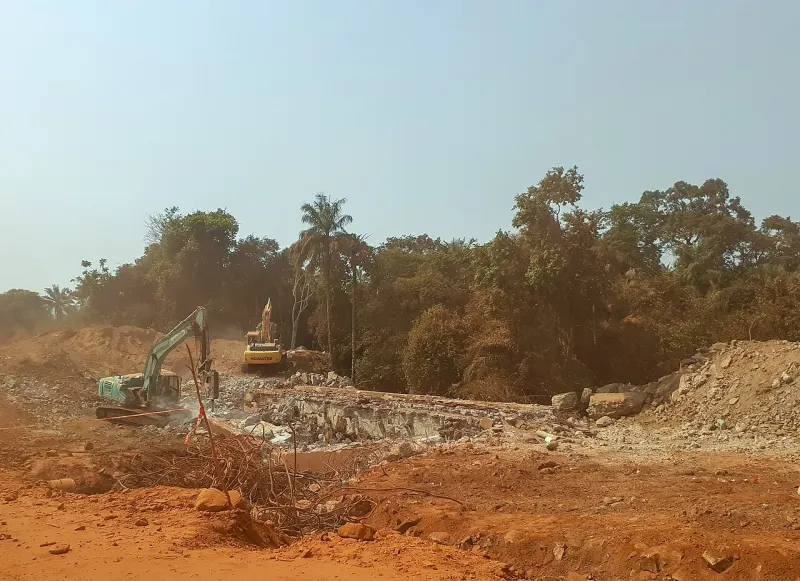
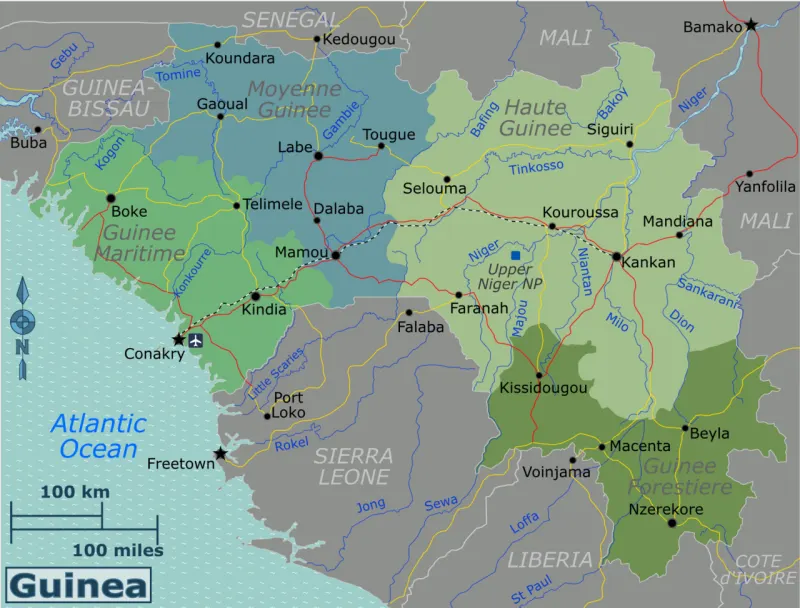
Forest Guinea is finally seeing its major road projects move forward. Last week, the Minister of Infrastructure, Facinet Sylla, and the Minister of the Economy, Finance and Budget, Mariama Ciré Sylla, toured the region to inspect the completed road linking Lola to the Ivorian border and assess progress on the N'Zérékoré–Yomou route.
Lola–N'Zoo–Ivorian border: 40 km to bring two countries closer
Around 40 kilometres long, the road that starts in Lola, crosses the sub-prefecture of N'Zoo and reaches the border with Ivory Coast has now been tarred. The project, managed by the Road Management Agency (AGEROUTE), was co-financed by the African Development Bank and the Guinean state, at an announced cost of 248 billion Guinean francs. It had been in the plans since 2014, but the actual works were carried out in about a year.
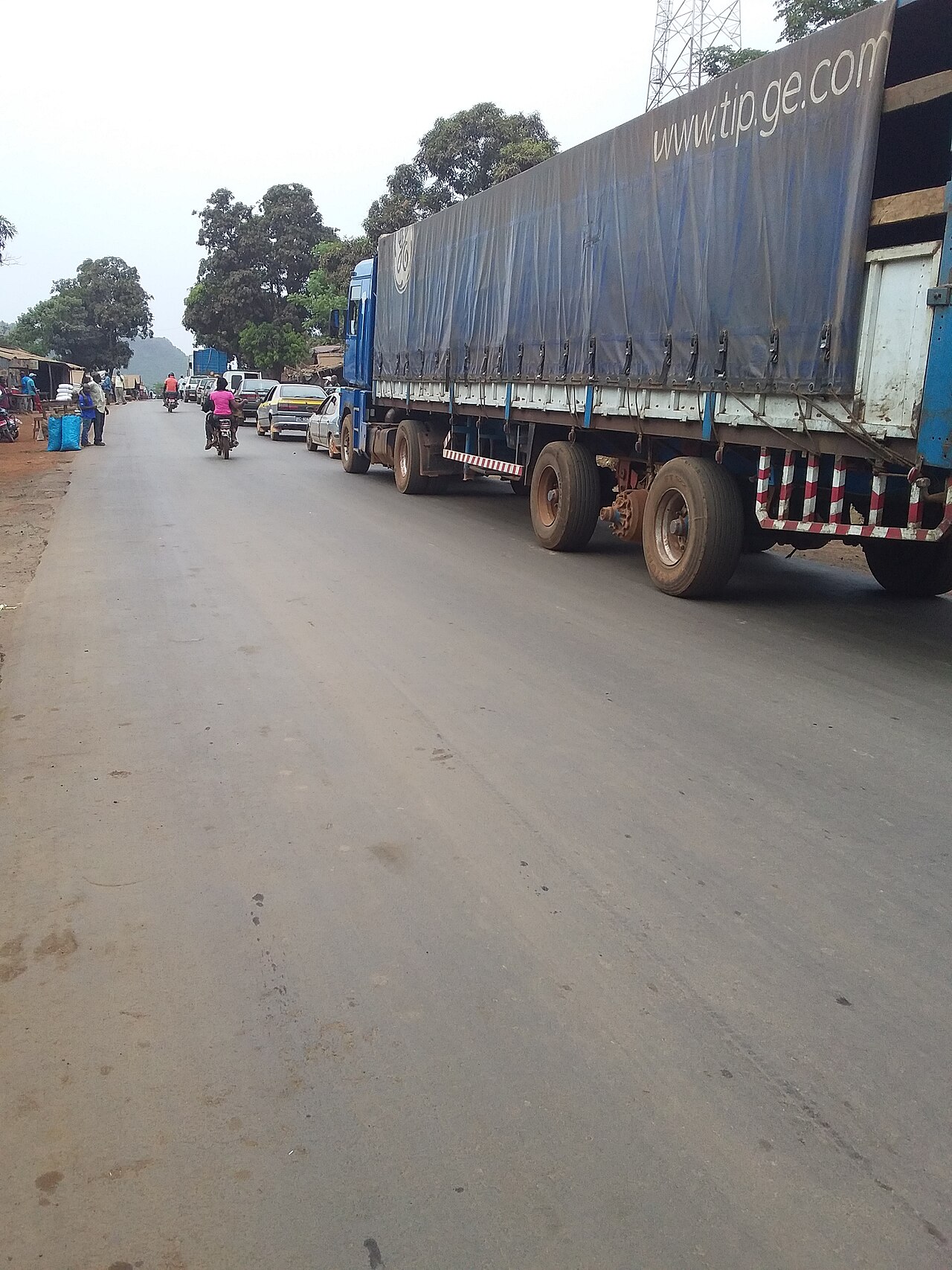
On site, the infrastructure minister summed up the expected impact in a single phrase: from now on, “you can cross the border without even realising it”. Ivory Coast's ambassador to Guinea, Issifou Coulibaly, who attended the visit, said that economically the two border regions would “become much closer”. The finance minister, for her part, emphasised the benefits for farmers, who will be able to get their produce to market with fewer losses and at lower cost.
N'Zérékoré–Yomou: grading completed, tarring awaited
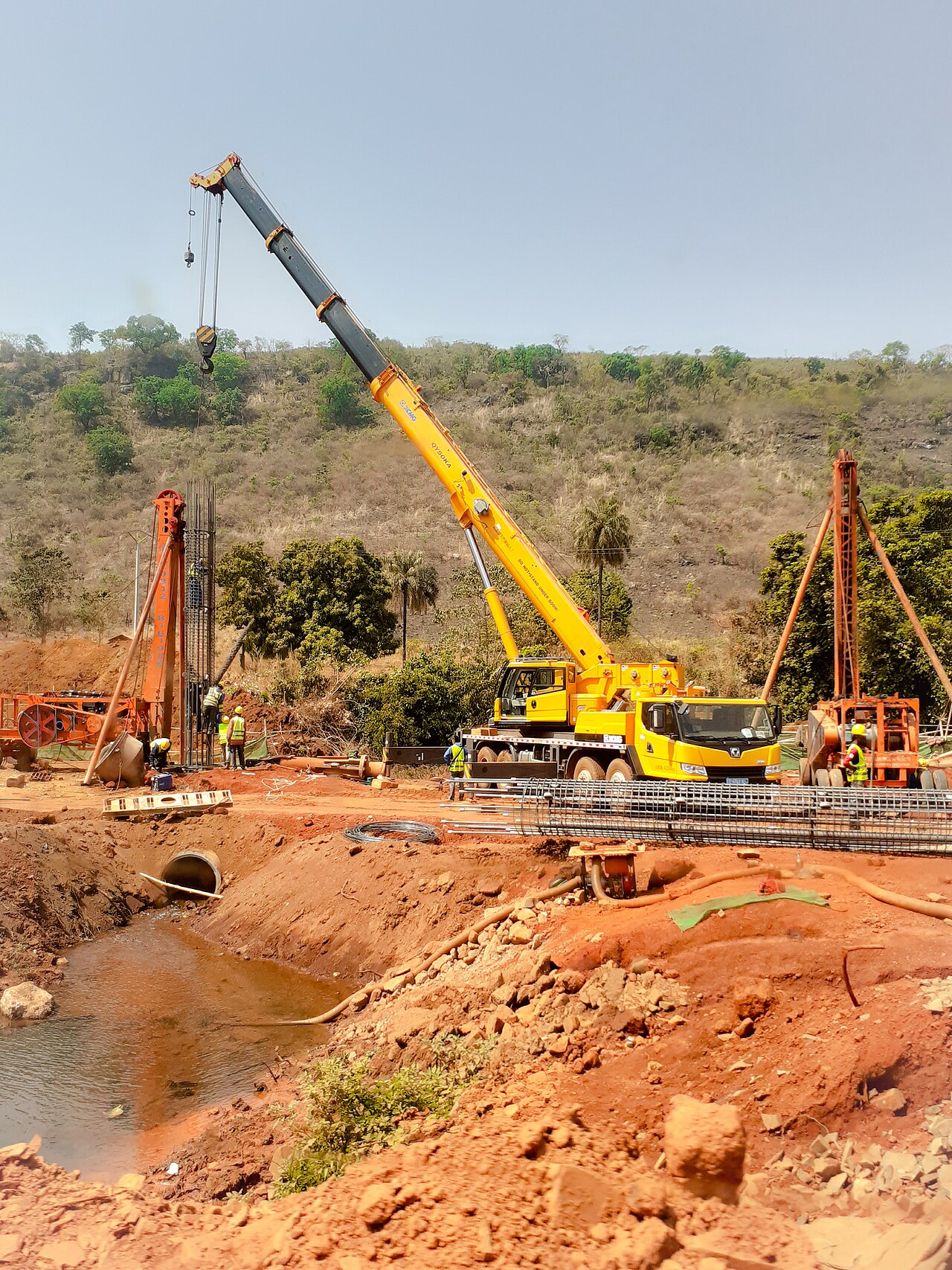
The second stop on the tour was the N'Zérékoré–Yomou road project, on which work began in December 2025. According to the infrastructure minister, the route is set to reach 114 kilometres by extending from Yomou to the Liberian border, as part of a regional integration drive. Grading of the roadway has been completed along the entire route, paving the way for the tarring phase. No completion date has, however, been given.
A distinctive feature of this project is that it is entirely funded from the national budget, Facinet Sylla stressed, as the finance minister confirmed on the ground. The minister presented it as delivering on the commitments of the Simandou 2040 programme. For Yomou, long one of the country's most isolated prefectures, the stakes are considerable: in the rainy season, getting fuel, goods and harvests in and out is often an uphill struggle.
Crackdown on unauthorised speed bumps
The visit was also an opportunity for a call to order. Facinet Sylla denounced the proliferation of speed bumps built without authorisation on newly tarred roads, which damage the surface and shorten the lifespan of the infrastructure. “Nobody can just get up and install a speed bump without permission”, he warned, while acknowledging that these installations are often a response to speeding in built-up areas. The state has pledged to regulate such structures in line with international standards, to run an awareness campaign with transport unions, motorbike taxi drivers and local authorities, and to give AGEROUTE the means to maintain the roads.
Finally, the minister mentioned other links to Ivory Coast, including the Beyla–Oguéné route, asserting that the policy of opening up isolated areas was only just beginning. For the people of the Forest region, the country's great agricultural region, the quality and upkeep of these roads will directly determine the price of produce and access to basic services.
Comments
Loading comments…